
Six Faces of Fear
The Mythic Functions of Fear in Fiction
Opening: The Doorway
Fear often catches us before we can put a name to it. It’s an instinctual response, a tightening of muscles and a quickening of breath that precedes our conscious thoughts. Then, our minds rush in to make sense of it, to tame it with logic and explanation.
But fiction isn’t interested in our neat little explanations; it’s fascinated by the raw, unfiltered fear that grips us before we can curate our reactions.
This distinction matters because stories don’t treat fear as a singular entity. They see it as a versatile tool, capable of revealing truths, warning of dangers, or even initiating profound changes. Fear isn’t just something to be afraid of; it’s a mechanism that stories use to explore the human experience.
This isn’t an essay about fear as a theme. It’s about fear as a tool. I’m going to talk about fear inside the story, inside the character, and inside you as the reader—because fiction works when it borrows real human psychology and runs it under pressure.
If that sounds like I’m “jumping layers,” that’s the point.
The story’s mechanics, the character’s interior life, and the reader’s nervous system are the same circuit when the writing is good.
Let’s start by examining how fear functions in fiction. We’ll explore six different uses of fear, each serving a unique purpose in shaping characters and engaging readers. These aren’t theoretical concepts; they’re tangible experiences that we can observe in well-crafted narratives.
The first room is often the most challenging to accept because of its brutal honesty.
Fear as a mirror.
This isn’t about confronting an external enemy so much as recognizing the darkness within ourselves. A prime example of this is found in “The Empire Strikes Back.”
Luke Skywalker, eager for training and power, finds himself on Dagobah—a place that feels both ancient and indifferent to his presence. Yoda doesn’t provide him with a structured curriculum; instead, he offers Luke a cave without instructions. When Luke asks what’s inside, Yoda replies, “Only what you take with you.”
This statement is crucial because it strips away the illusion of fear as an external threat. When Luke enters the cave and faces Vader, he discovers that his enemy is, in fact, himself.
As we delve deeper into these rooms, we’ll see how fear can project our future selves, become an atmospheric presence, initiate transformative changes, spread like a contagion, or evolve into a disciplined practice. Each room offers a different perspective on fear, showing us how it can be used to enrich storytelling and deepen our understanding of the human condition.
This essay won’t provide easy answers or comforting resolutions. Instead, it aims to offer a clearer view of what fear does when fiction puts it to work—and why it continues to resonate with us so powerfully.
We begin with fear as a mirror held up too close, revealing the parts of ourselves we’d rather keep hidden.
I. Fear as Mirror: “The thing I’m fighting is me.”
Mirror fear is a revealing experience. When a character confronts what they think is their enemy, they sometimes discover that the real confrontation is with themselves. It’s not about facing a monster; it’s about recognizing the self behind the mask—the part of us that looks good in photos or tells a neat story.
And the other side, the one with teeth.
This kind of fear isn’t about measuring strength. Instead, it’s about understanding your true nature. It asks:
What do you reach for first when things get tough? What do you consider “necessary” when your heart races? Who do you become in those moments?
Dagobah is a perfect example because it avoids the typical dramatic flair. There’s no swelling music, no clear instructions, and no villain monologue explaining the lesson. Just a swamp, a teacher who won’t sugarcoat things, and an ancient doorway that feels older than the story itself.
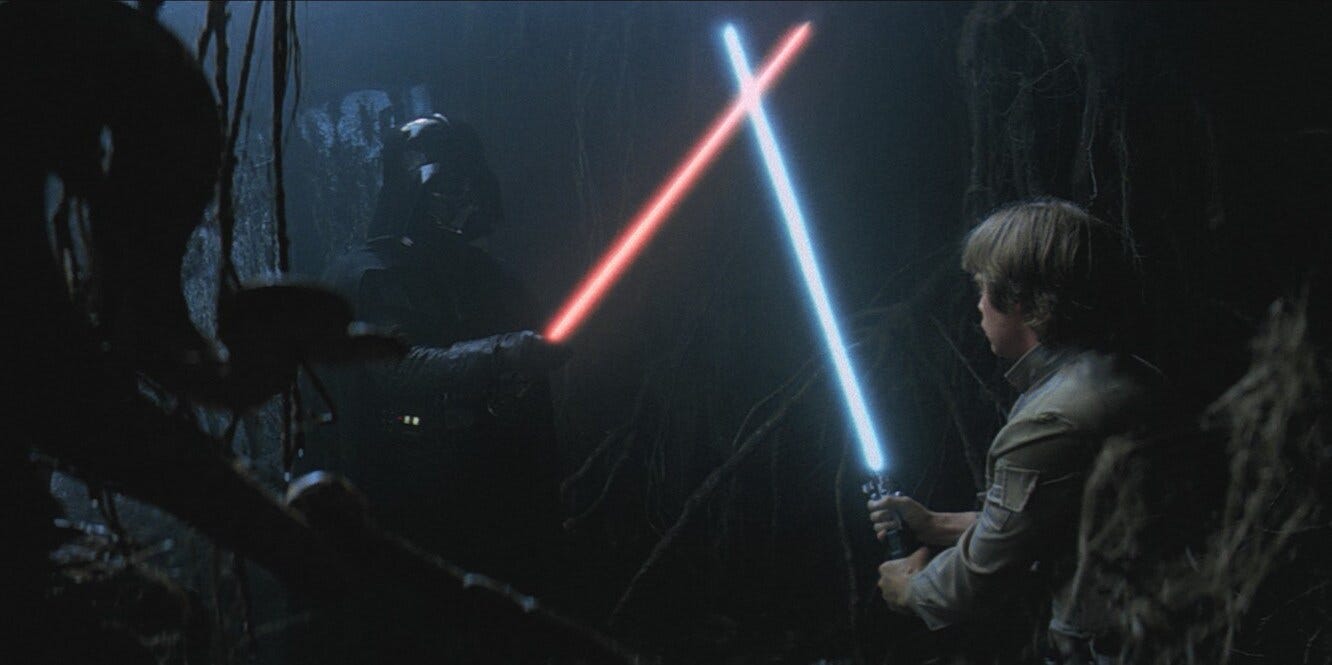
The cave on Dagobah
Luke craves training like young people want it: fast, neat, flattering.
He wants skills and certainty, to feel like the hero of his own story.
Yoda offers him a cave instead. A “place of evil,” he says, and it hangs heavy with an indefinable dread. Luke asks what’s inside, typical of anxious minds trying to pin down the unknown.
Yoda’s response is brutally simple:
“Only what you take with you.”
That’s mythic logic. The cave doesn’t serve up random monsters; it reflects back what you carry within—intensified and inescapable.
Luke buckles on his lightsaber, of course he does. That act encapsulates his argument with fear: I can overcome this with force. With being armed. With being right.
He enters the cave and it’s just stifling darkness. Sound echoes inward; breath becomes an unrelenting metronome. The air grows thick, like silence when you’re alone with uncomfortable thoughts.
Then: Vader appears, as an image Luke already harbors.
The black mask, the archetypal villain, a perfect symbol for hatred.
Luke attacks without pause, no questions asked, no attempt at understanding.
He swings; Vader falls; the head rolls.
For a fleeting moment, it feels like a cheap victory: swift, decisive, satisfying. The kind that lets you leave before learning anything.
Then the mask cracks open, revealing Luke’s own face.
The cave doesn’t lecture. It simply shows him the wiring.
What the mirror does
Most stories give heroes external enemies because it’s neat. Danger over there, virtue over here—a simple moral map.
Mirror fear shatters that map. It suggests the enemy has a way into you, a compatibility, a path to wearing your hands.
Luke’s terror isn’t “there is evil.”
It’s “evil fits in me.”
That’s the scene’s sting. It’s a fear without an easy response. You can’t punch it away or outrun it. You can barely confess it without sounding unhinged.
The cave delivers a single, unsettling truth and lets it rot in him:
You are capable.
Not of heroism. He already knows that story.
Of becoming the thing you hate while convinced you’re doing right.
Luke exits visibly shaken because he’s been revealed to himself.
You can recover from momentary danger; but seeing your own potential for corruption wearing the enemy’s mask is another matter entirely.
The aftertaste: innocence drains out quietly
After Dagobah, Luke can’t maintain the comforting illusion that conflict is purely external. The cave introduces a hairline crack into every future decision.
Anger feels different now. Certainty feels risky; victory, questionable.
This is mirror fear’s true function: it doesn’t harm the character physically.
It wounds their self-image.
Once that story is injured, the narrative shifts. Training isn’t just about acquiring skills; it becomes a question of what kind of person emerges under pressure.
Not “can you win?”, but “at what cost?”
Mini-expansion: Spider-Man and the fear of failing the bond
Spider-Man grapples with a unique kind of fear—a mirror reflecting his deepest insecurities. Unlike many heroes who dread death or physical harm, Spider-Man can endure pain, humiliation, even defeat. His true terror lies in being the cause of someone else’s suffering.
He fears that phone call—news of a loved one hurt because he wasn’t there fast enough. He fears seeing an empty chair at a dinner table, knowing it should have been occupied by someone he failed to protect. He fears arriving too late, trapped forever in that cruel minute of regret.
This fear reveals what truly binds him: not just responsibility, but a profound sense of duty as a weight he carries constantly, even when he longs to set it down. His suit becomes a symbol of promises he strives to keep, yet sometimes fails. The chasm between his intentions and reality is where this mirror fear resides.
It doesn’t question his strength, rather it asks:
“What will you give up to shield those you love from the consequences of your power?”
When he falls short—and he does at times—the terror isn’t just loss, but self-blame.
“I was the one who let it happen.”
This is a more intimate kind of fear, one that doesn’t allow for excuses.
Mirror fear occupies the first room in this journey because it’s intensely personal.
It’s the moment when a story forces its character to confront their own darkness, to acknowledge that the monster they fight might be a reflection of themselves.
It whispers:
“You can’t vanquish the dragon without checking whether you brought dragon-seed in your own chest.”
This is fear as introspection, a call to self-awareness before action.
But beyond this inward gaze lies another room. Here, fear shifts from mirror to calendar, a looming future painted in stark colors, hanging over the present like an inevitable judgment. In this space, fear becomes not just reflection, but prophecy—a vision of what might be that demands urgency and shapes every choice made today.
II. Fear as Prophecy: “The future becomes a weapon.”
Prophecy-fear is that haunting vision of tomorrow you can’t escape. It shimmers brightly, almost within reach, making your imagination run wild with possibilities. Once your mind fixes on this ending, it starts treating it as an inescapable reality, as if the consequences are already piling up.
This insidious fear has a way of hijacking your creativity, transforming your imaginative musings into seemingly authoritative decrees.
In this mindset, tomorrow morphs into a daunting courtroom. The present becomes the trial where your choices are scrutinized and judged. Every decision feels like a high-stakes negotiation with destiny.
Once you’re trapped in this thought pattern, fear achieves its ultimate victory: instilling a sense of urgent maturity. It grants you the “right” to proclaim that time is slipping away.
Macbeth exemplifies this chilling transformation. It’s not merely about eerie witches; it’s about how a prophecy can evolve into a rigid timetable and eventually a suffocating cage.
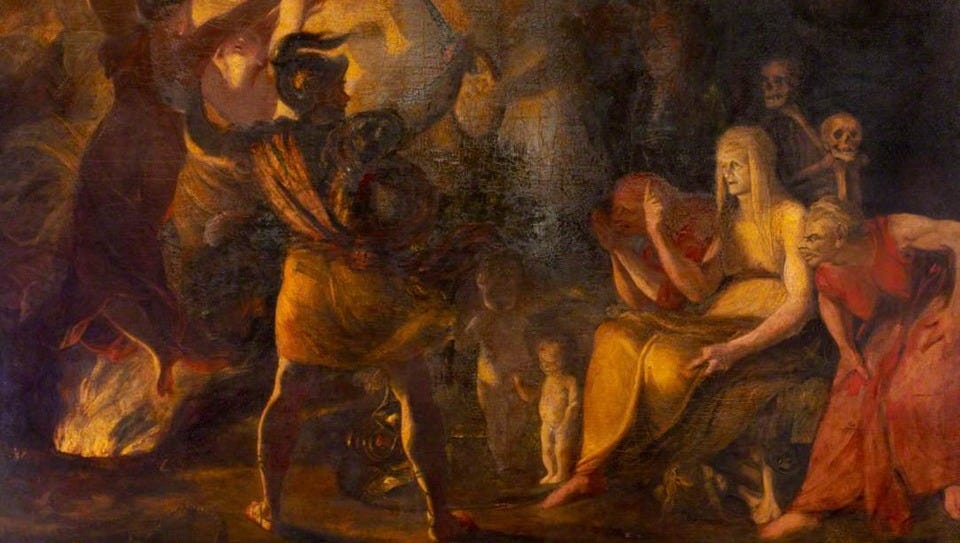
Macbeth: When the Future Takes Control
Macbeth operates within a structured world, albeit not a moral one. It has clear hierarchies, loyalties, and opportunities for advancement. He understands how to navigate this environment and can envision tomorrow unfolding smoothly.
Then come the witches, delivering a prophecy that burrows into his mind like a parasite:
“You will be king.”
From that point forward, the present ceases to exist as it is. It transforms into a mere prelude, a waiting room, an obstacle course. Macbeth begins interpreting everything through the lens of this forecast.
A reigning king becomes an obstacle.
A trusted friend turns into a potential threat.
Even a minor delay morphs into an urgent danger.
Prophecy-fear refuses to remain just a feeling; it evolves into action. It demands management, preventive measures—violence disguised as pragmatism.
This is its allure: fear masquerades as responsibility. It whispers, “Act now or lose your chance. Hesitate and you’re naive. Wait, and the future slips away.”
Driven by this fear, Macbeth begins treating the future like a fragile treasure that must be shielded from time itself. But in attempting to protect something that doesn’t yet exist, he starts transforming the present into a series of crises.
These emergencies breed more uncertainty, which in turn generates more fear and demands for control—a vicious cycle that tightens around him like a noose of bureaucracy. Macbeth’s downfall is not due to a single dramatic event but his futile attempt to govern time with violence. He repeatedly trades the living present for an imagined future until he’s trapped in a narrowing path of inevitability.
There’s a cruel efficiency to this process: the more Macbeth runs from his fears, the more he creates the conditions that fulfill them.
Fear makes us predictable; it narrows our vision, simplifies our ethics, and converts “might” into “must.” A person convinced their future is closing in will act like a cornered animal, all the while believing they’re being rational.
In truth, fear doesn’t predict the future—it constructs a cage around it.
What prophecy-fear buys with your attention
Beneath the surface of ambition, there lurks an ancient terror:
the dread of fading into obscurity.
Macbeth’s fears extend far beyond the shadow of death. He grapples with the slow drip of meaning from his life, the gnawing suspicion that time will march on, leaving him as little more than a fleeting footnote in history.
The prophecy offers him an escape hatch—a path to inevitability—but it also binds him with chains of dread. Now, he’s haunted by the prospect of failing to become the king he was promised.
This is prophecy-fear’s true power. It transforms a mere possibility into a commanding authority that you must serve.
Once this fear takes hold, you begin to act as if your fate has already been sealed, and the only remaining question is whether you’ll cross the finish line in time. Your conscience, once a moral compass, becomes little more than an administrative task to be checked off. The concept of “later” evaporates, leaving only the urgent now.
The most unsettling aspect is how comfortably this fear settles into your psyche from within.
You can always rationalize one compromise as necessary. You can always dress up a single act of cruelty as mere containment. You can always label the first betrayal as “a necessary step.”
In essence, prophecy-fear functions like a justification engine, fueled by the relentless march of time.
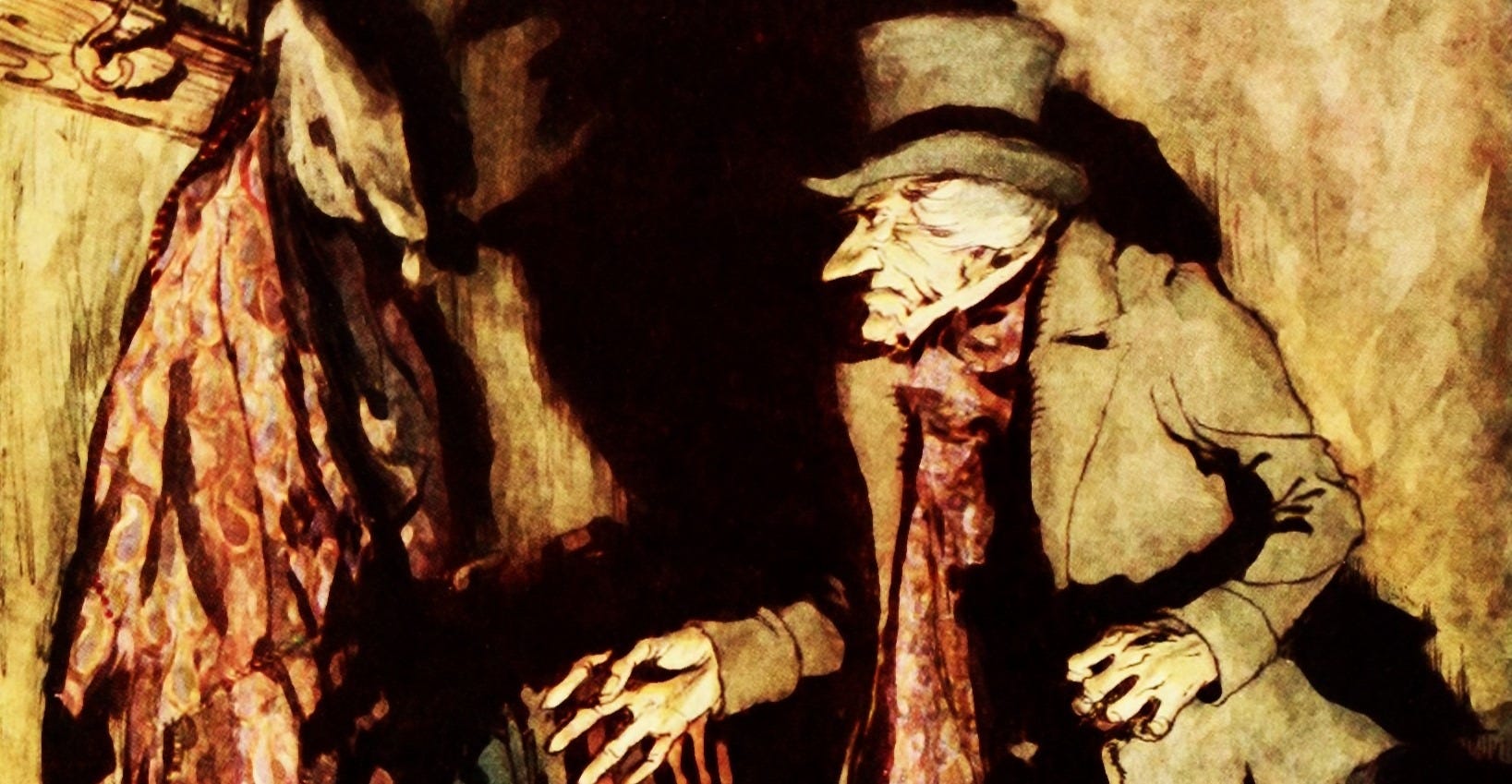
A Christmas Carol: the future as warning with a hinge
Unlike Macbeth, where the future feels like a command you must obey, A Christmas Carol presents it as a diagnosis—something to examine, not just fear. Scrooge is shown a future that’s painfully familiar: a life reduced to numbers, relationships turned into transactions, and a death that barely ripples anyone’s world. It’s not melodrama; it’s a stark reflection of where he’s headed.
But here’s the key difference: this future isn’t set in stone. It’s conditional. This one tweak changes everything. Fear still points to what might be, but it doesn’t slam the door shut. Instead, it hands Scrooge his agency back. The present becomes a place of possibility again.
Macbeth sees his forecast and starts sacrificing others to make it happen.
Scrooge, however, sees his forecast and realizes that the sacrifice has already been happening—slowly, steadily, in the choices he’s made about who he wants to be.
Both stories point to the future, but they serve different purposes. One uses the future to justify harm; the other uses it to illuminate the harm already done.
Some futures are threats meant to terrify; others are warnings with room for change.
The aftertaste: when the future becomes a ruler
Prophecy-fear suffocates the present, squeezing it into a narrow corridor where every step feels like a reckoning. It transforms mundane moments into high-stakes auditions and reduces people to mere variables in an equation you can’t control.
This fear tricks you into exchanging the richness of what’s here and now for the cold certainty of an imagined future—all while convincing you that this swap is the height of practicality.
Fiction excels at revealing how fear can disguise itself as wisdom. It shows us how a prophecy, whispered softly enough, can become a bludgeon without ever raising its voice. The true terror isn’t in the witches or the omens; it’s in something far more insidious:
A mind enslaved to an inevitable future will start inflicting violence today to justify that predetermined destiny. It turns “realism” into a cruel taskmaster, demanding sacrifices in the name of an outcome you can never truly know.
We’ve lived in the future long enough. Next room: no visions. Just air.
Fear baked into the walls, training posture, speech, even silence.
III. Fear as Atmosphere: “The world itself feels unsafe.”
Atmospheric fear seeps into every breath you take.
It’s not confined to a single scene; it permeates everything like a persistent fog.
This low-pressure system settles in and refuses to leave, gradually blending into what you call “reality.”
This fear doesn’t need dramatic threats because its true power lies in how it reshapes your daily existence.
Its purpose is conditioning. A story crafted with atmospheric fear creates a world where danger lurks just beneath the surface, primed to trigger your instincts. Calm becomes a luxury you can no longer afford; silence echoes with unspoken dangers. Even mundane decision carries an unseen weight.
The focus isn’t on altering who you are or how time passes.
Instead, it targets your physical and mental default modes—how you stand, how you pay attention, how your body responds to the world around you.
1984 exemplifies this perfectly by treating fear as an omnipresent utility, like electricity or water.

1984: fear as an operating environment
In Orwell’s world, fear isn’t a sudden storm; it’s the constant hum in the background, as essential and invisible as electricity. It permeates everything, whether you acknowledge it or not.
The brilliance lies in the ordinary. The rules aren’t dramatic; they’re bureaucratic. Surveillance isn’t a looming villain but an ever-present climate that you can’t escape. Citizens don’t spend every moment screaming; instead, they spend their days policing themselves.
This self-management is the true violence.
Many societies punish those who rebel. But 1984 reveals something more insidious:
a society that stifles individual thought before it even has a chance to form.
Privacy isn’t just absent; it’s seen as a threat. Language is simplified so that thoughts have fewer hiding places. Even facial expressions become risky, for they might betray an unsanctioned emotion.
Winston’s fear isn’t dramatic or sudden. It’s a constant state of adjustment.
He scrutinizes his expressions, edits his reactions, and monitors the tone of his own mind as if it were a cough in a quiet room. He moves through life like someone who always has an invisible audience.
And that’s the key: once fear becomes the atmosphere, you don’t need to be watched to feel watched. You carry the watcher with you.
You can sense how this alters time. Not in the way prophecy-fear collapses the future into the present, but more subtly and corrosively: through the disappearance of “now.” There’s no unobserved moment where the self can relax its grip. Every moment carries a hint of performance.
A person can recover from an isolated danger.
Atmosphere-fear denies recovery. It teaches the body that tension is the new normal. You stop asking, “When will this end?” and start building a life around the assumption that it never will.
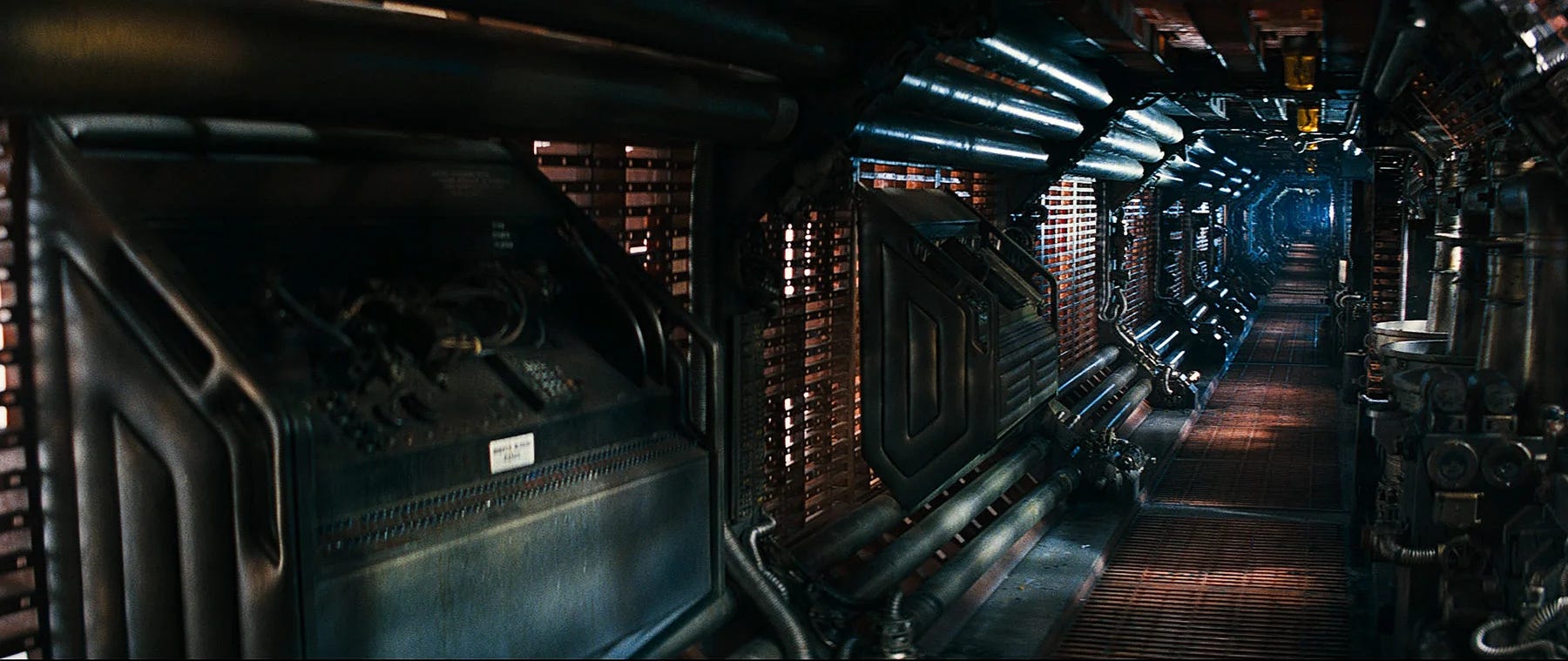
Alien: fear as space that won’t let you relax
In “1984,” fear is woven into the social fabric; in “Alien,” it’s carved into every corridor. The creature is terrifying, but the ship does most of the heavy lifting when it comes to instilling dread.
The architecture itself feels designed to make you a target long before any danger appears on screen. Narrow passageways that seem to close in around you, sharp angles that catch your eye and make you second-guess every shadow, vents that turn ceilings into potential hiding places for horror. Doors aren’t safe havens; they’re choke points, trapping you rather than protecting you.
The film guides your attention relentlessly: to the edges of the frame, where danger might lurk; to blind corners that hide unknown threats; to seemingly empty spaces that refuse to stay innocuous.
You start interpreting every element of the environment as a potential threat. A hallway becomes a funnel, narrowing your options and heightening your anxiety. Shadows transform from mere darkness into ominous possibilities. Even slow mechanical sounds become a ticking clock for dread, counting down to an inevitable encounter.
This is why the alien can remain off-screen for extended periods without the tension waning. The atmosphere has already done its job, priming you for fear. You’re on edge, your mind conditioned to keep the fear alive even when nothing seems to be happening.
And here’s the chilling twist: once your body learns this pattern, “nothing happening” stops being a relief. It becomes an intake of breath before the next terrifying event.
What atmosphere-fear costs
Living in constant fear makes survival feel like the only smart choice.
It twists relaxation into carelessness and teaches us that trust comes at a cost. It rewards our vigilance with a tiny sigh of relief—”at least I’m ready”—but then makes us pay for it in ways we don’t always notice: openness, playfulness, honesty, even sleep.
The longer you live like this, the more normal it starts to feel. Like it’s just part of growing up.
That’s what makes it so scary. The pressure becomes your new normal, and that guarded version of yourself? It starts to feel responsible. You might even take pride in it: “Look how self-sufficient I am. Look how careful. Nothing slips by me.”
Great fiction uses this kind of fear to show us the dark side of that pride.
Because a world that keeps you on edge also makes you compliant. A nervous system always looking for threats is easier to control. You don’t have to convince someone of the official story if they’re too anxious to question it.
And we recognize this beyond just dystopias and sci-fi. It happens in smaller places too: homes where moods are landmines, workplaces watching your every word, friend groups where one wrong tone can turn you into a target. Same principles, different scale.
That’s what makes atmosphere-fear so powerful.
A story can hold you under that pressure for a long time.
Eventually it has to do something sharper: bring the character to a line where conditioning isn’t enough. A point of commitment. A gate.
Threshold-fear starts there.
IV. Fear as Threshold: “You don’t get to pass unchanged.”
A story can keep you on edge for ages.
You learn to adapt. You get good at staying alert. You pick up tricks to avoid trouble.
Then, just like life, the narrative hits you with a moment where those habits aren’t enough.
A situation that being careful won’t fix.
A moment that demands something huge from you—something irreversible, costly, eye-opening. The kind of moment when you physically feel an older version of yourself slipping away.
That’s where threshold-fear lives.
It’s not just “I might get hurt.”
It’s “I might become someone I can never go back to being.”
This is where fear stops being a warning and starts being a barrier. You can’t cross it without paying a price. The cost could be pain, or new knowledge, or innocence, or even the simple right to stay the person you were just five minutes ago.
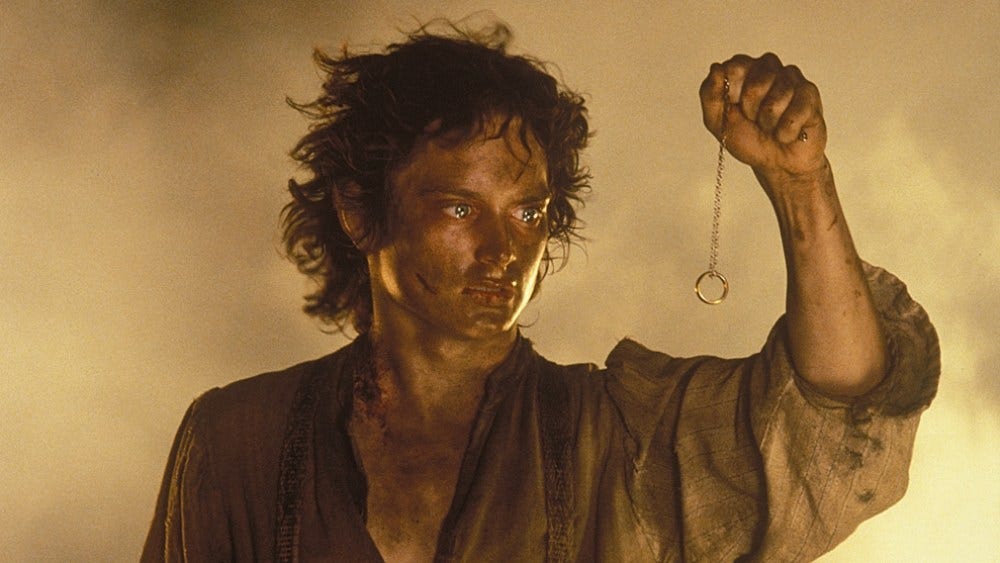
Frodo at the edge of ruin: the fear of losing the self
In “The Lord of the Rings,” there’s plenty to be scared of: the relentless pursuit, the oppressive darkness, the feeling of being hunted by something that never tires.
But threshold-fear goes deeper than that.
It’s the dread of internal collapse—the fear that the self you’ve always counted on won’t make it through this final test.
The Ring doesn’t just tempt Frodo. It reshapes him. It slowly eats away at his inner freedom, patiently and relentlessly. The real danger isn’t some dramatic moment of seduction. It’s erosion: suspicion taking hold, possessiveness becoming rational, isolation feeling like safety.
That’s how thresholds work. They wear you down until the only thing left is the path forward.
By the time Frodo reaches Mount Doom, the story has already changed something fundamental: the Ring isn’t just a burden he carries. It’s become a relationship.
It has a voice. It pulls at him with gravity. It has a claim on his soul.
So the real fear at this precipice isn’t the volcano or even death. It’s knowing that letting go will feel like tearing out a part of himself—something that’s woven itself into the very core of who he is.
And then comes the moment fiction usually saves for a triumphant ending.
Frodo can’t do it. He claims the Ring as his own.
But this isn’t a twist. It’s the whole point. Threshold-fear isn’t something you conquer with bravery. It’s a line that reveals what your journey has made of you. It shows you the true cost.
Throughout his ordeal, Frodo’s been circling one question:
What if I make it to the end and find out that the journey has changed me completely?
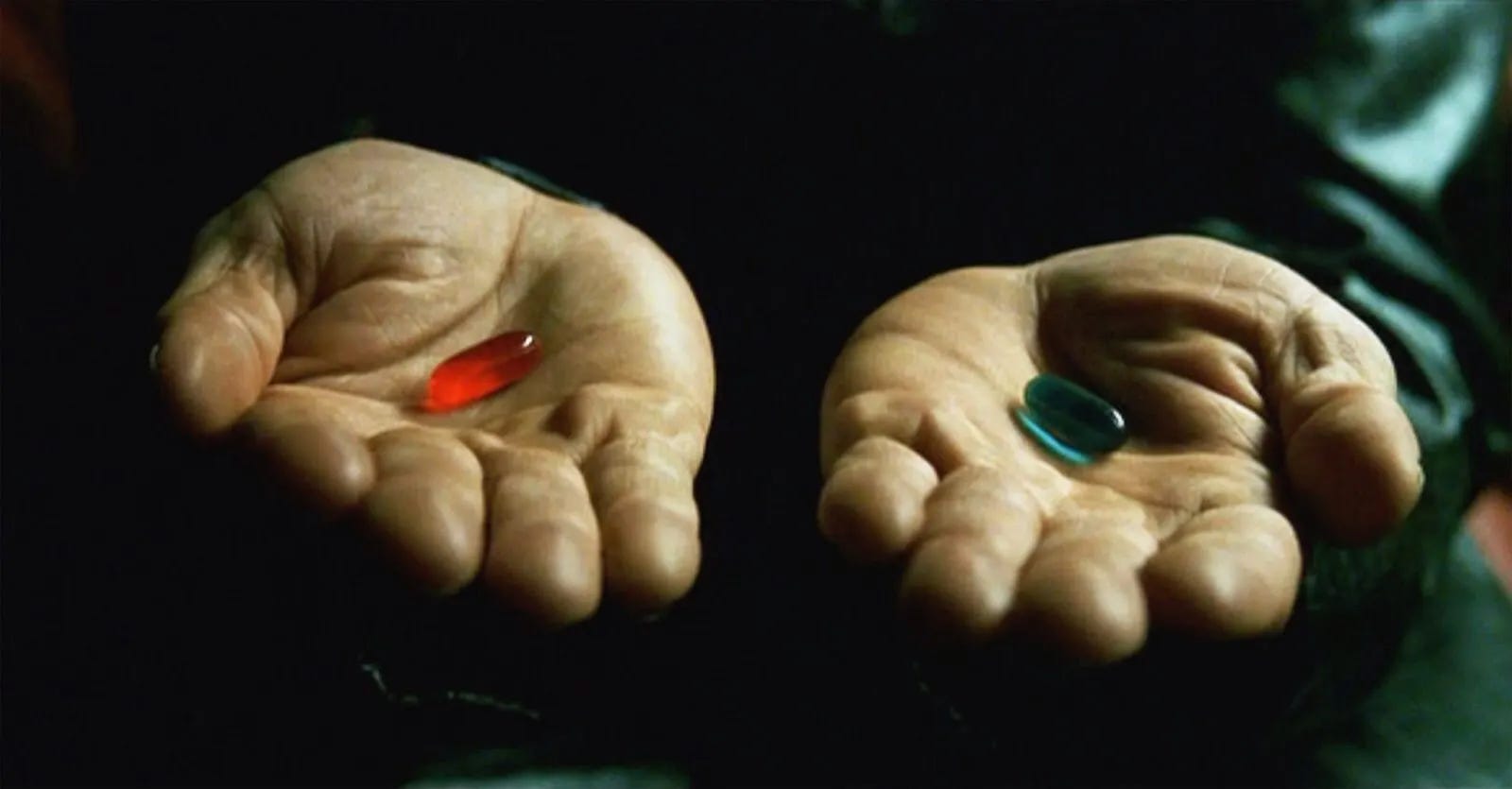
The Matrix: fear of irreversible knowledge
That famous choice in “The Matrix” isn’t about physical danger.
It’s about being banished from innocence.
If you look past all the memes and noise that came later, what you see is simple human fear: once you know something, you can’t unknow it. Once you wake up, going back to your managed dream isn’t the same.
Irreversible knowledge changes everything—what you enjoy, who you can be around, what “normal” even feels like. It messes with the story you tell yourself at night.
That’s what Neo is facing.
A door he can’t uncross once he goes through it.
The fear here is existential. Your body senses the social and psychological cost before your mind can even put words to it. The fear isn’t “I’ll die.” It’s “I’ll be responsible for what I see.”
And that responsibility is heavier than people let on. It isolates you, makes you harder to satisfy, turns you into a problem in rooms full of denial.
So the real choice isn’t “adventure vs safety,” but “truth vs belonging.”
What thresholds do to a story
Before hitting a threshold, characters can daydream about change. They can imagine transformation, rehearse courage, knowing they can always retreat.
Thresholds remove that option.
After crossing, old excuses don’t fit any longer. You have knowledge you didn’t before, damage you can’t undo, responsibility you can’t unload. Even if nothing “bad” happens outwardly, your inner world is changed.
Threshold t for what can never happen again: the ease of ignorance, believing simpler stories, the freedom of not knowing what you now know.
Stories use threshold-fear because it tells the truth about transformation. It doesn’t buy into the self-improvement fantasy where change is a quick montage. In real life, change has hinges. Doors close behind you. You keep moving forward anyway.
Threshold-fear honors this reality: transformation isn’t a glow-up.
It’s an initiation. And initiations leave marks.
The next room breaks that containment.
Fear moves between people, and suddenly the story isn’t just about one person’s courage or collapse.
It’s about what fear does to groups—how quickly it rewrites what people allow themselves to do.
V. Fear as Contagion: “A group becomes a different animal.”
Fear goes public quietly.
This transformation unfolds subtly, like the shifting of moods in a room.
A glance is misinterpreted, a rumor takes root, and words are repeated with newfound conviction. People begin scrutinizing each other’s expressions before examining their own thoughts, as the atmosphere becomes charged with collective awareness.
Once fear inhabits the space between individuals, it assumes a new role.
Within an individual, fear serves as a mirror reflecting inner anxieties, a forecast of potential dangers, an emotional climate, or a threshold defining limits. However, within a group, fear evolves into a permission structure, dictating what actions are acceptable while preserving one’s sense of moral integrity.
This contagious fear edits moral codes in real-time, offering excuses that masquerade as duties and unity that is mistaken for safety. It provides targets that bring relief, albeit temporary. The true power of this contagion lies not merely in instilling fright but in its ability to reorganize the group dynamics entirely.
Arthur Miller’s “The Crucible” exemplifies this phenomenon, illustrating how swiftly fear can morph into an accusation machine—and how rapidly such a mechanism can spiral out of control, consuming everything in its path.
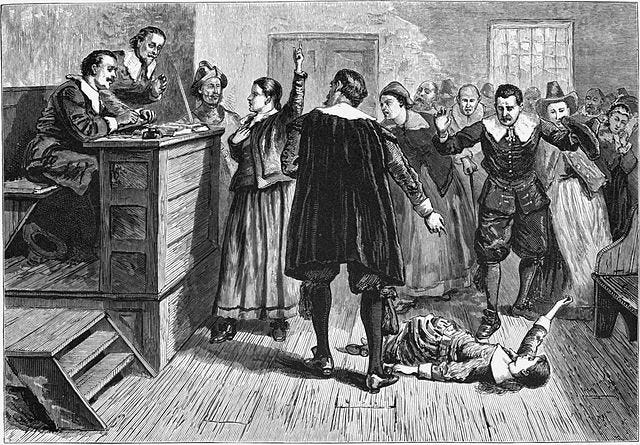
The Crucible: fear that turns into a machine
Salem’s story doesn’t begin with violence but with confusion.
A town witnesses trange behavior from some girls, leaving adults baffled.
A community rooted in moral certainty suddenly faces something messy and out of control. This uncertainty is the real spark that ignites fear because doubt is what fear cannot tolerate for long.
The town’s response is instinctive: name the threat.
Once named, the threat becomes manageable. Rituals can be created around it, punishments meted out, and evil pinned on individuals rather than acknowledged as a pervasive force. Fear transforms into an accusation “machine” because accusations solve several problems at once:
They give the community a narrative to follow
They provide a clear task or mission
They convert dread into tangible action
Perhaps most compellingly, accusations offer status. Those who accuse are less likely to be accused themselves, gaining protector status and recasting their fear as vigilance. This is the pivotal moment where a frightened group learns that fear can be traded for power. The performance of certainty becomes a survival strategy, and when survival depends on this performance, truth becomes dangerous—because reality threatens the structure built by fear.
This system cannot tolerate hesitation or nuance. Nuance slows down the machine and reintroduces uncertainty. Therefore, the machine punishes nuance first, rewarding instead:
Clear, unequivocal statements
Visible displays of loyalty
Those who can repeat the phrases that keep the engine running
The true terror of “The Crucible” isn’t just the loss of innocent lives but how quickly the town normalizes this behavior. How efficiently it operates under these conditions and how easily “protecting the community” becomes a justification for destroying its capacity for truth.
What contagion-fear does to morality
While atmosphere-fear conditions bodies, contagion-fear shapes permission.
It rewrites the boundaries of acceptable behavior, allowing people to act cruelly while maintaining a sense of moral integrity. This fear disguises cruelty as safety, duty, or necessity, creating a perverse logic that justifies inhumane actions.
Moreover, contagion-fear demands a target.
Unable to tolerate uncertainty, it invents one if necessary, for false certainty is preferable to honest doubt. A scapegoat provides the group with a sense of resolution and makes fear tangible through action.
Once a scapegoat exists, the fear becomes self-sustaining.
Each accusation validates the perceived danger,
each punishment affirms the system’s necessity,
and each public spectacle educates onlookers in the art of survival.
Eventually, the community’s moral compass shifts from “what is true” to “what keeps me safe within the group.” This transformation redefines the animal that is the community: its instincts realign with belonging, and belonging becomes synonymous with fear.
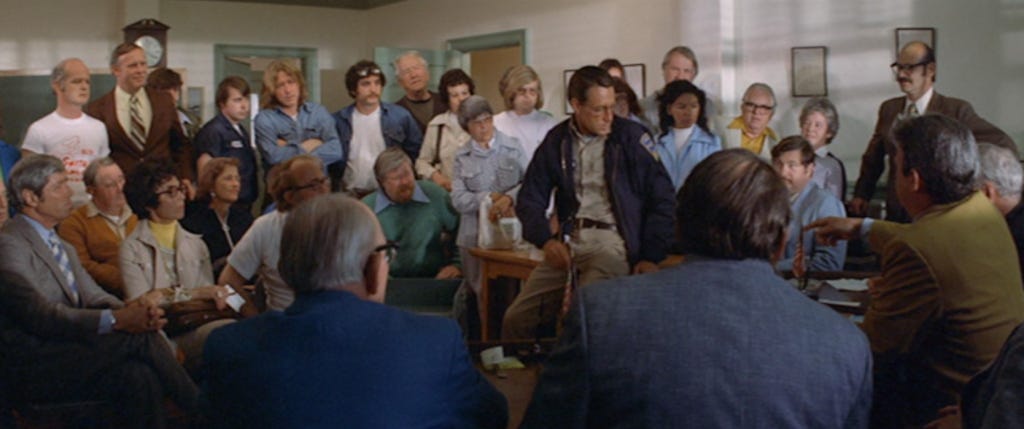
Jaws: the town as a second predator
Jaws is useful here because the threat is real.
There actually is a shark, and people are dying. The fear isn’t just in their heads; it has a legitimate basis.
But that doesn’t stop panic from spreading like wildfire.
The town itself becomes a living entity under siege—fighting to preserve its identity, its economy, and its pride. This tangled mix of reasons matters. A community rarely panics for a single cause. It panics because everything it holds dear is intertwined, and it feels like the threads are unraveling.
So the fear takes hold and spreads.
It ripples through town meetings, arguments, and gossip. It fuels the need to find someone to blame, someone to reassure, or someone to “take care of things.” It feeds on the desire for closure.
Eventually, the town does what frightened groups do: it turns the resolution into a spectacle.
The hunt isn’t just about strategy anymore; it’s a ritual meant to restore control.
A way to declare publicly, “We are not prey.”
That’s also why catching the wrong shark is so significant. It’s not just a plot point but psychological. The town desperately needs a symbol of victory, so it accepts a substitute. It chooses the comfort of closure over the accuracy of facts.
Contagion-fear doesn’t prioritize truth. It seeks relief.
And in a frightened group, that relief often comes at the cost of scapegoats, catchphrases, and oversimplified narratives.
The shark threatens lives. But social fear compromises sound judgment.
The aftertaste: nuance is the first casualty
When fear becomes contagious, complexity starts to look suspicious.
Complexity slows things down. It invites arguments. It forces people to admit they don't have all the answers. Fear sees that as a sign of weakness.
So the group rewards certainty, even if the certainty is fake.
It punishes questions, even if the questions are necessary.
Cruelty can feel justified because everyone is "just doing what has to be done." No one feels personally responsible. The moral weight is spread thin, like dust in the air.
That’s why contagion-fear is so frightening in fiction. It shows the thin membrane between civilization and ritual violence. It shows how fast “protection” can become appetite. How quickly a crowd can start demanding sacrifices while calling itself righteous.
Sometimes the monster in the story is a monster.
Sometimes the monster is the village deciding it needs one.
So what do you do when fear is real?
When it’s tangible, all around you, and keeps coming back?
The final scene isn’t about vanquishing fear. It’s about managing it.
VI. Fear as Discipline: “Not the absence of fear—the handling of it.”
At the far end of fear, the story stops pretending fear is a problem you can solve once.
There is no final battle. No permanent win. No magic cure.
Fear keeps returning because our bodies keep doing what they do naturally:
sensing danger, tensing up, imagining the worst. The question changes from "How do I make this go away?" to something more challenging and less glamorous:
“How can you live your life while fear is always there?”
Discipline-fear is fear handled as practice.
It’s not about faking bravery or pretending to be unaffected.
It’s about method. About finding a way to stay in control of your next move while panic tries to take over.
The goal isn't to stop feeling afraid. It's to manage what that fear tries to do. It tries to grab your attention, fill your imagination with worst-case scenarios, make everything feel urgent.
Fear wants to narrow the world until only one action feels possible.
Discipline helps you widen it back out again.
Dune gives the cleanest articulation of this, and it’s famous for the right reason:
it doesn’t flatter you. It gives you a procedure.
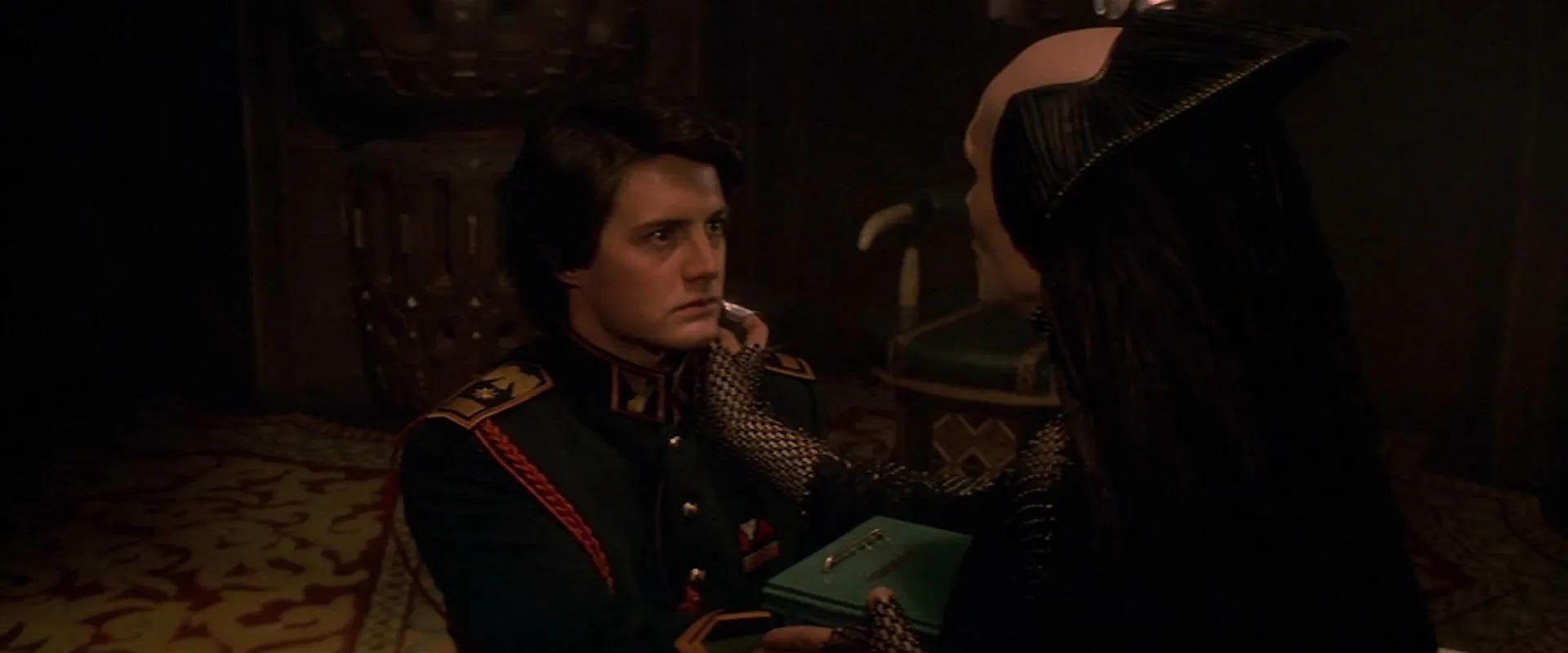
I must not fear.
Fear is the mind-killer.
Fear is the little-death that brings total obliteration.
I will face my fear.
I will permit it to pass over me and through me.
And when it has gone past, I will turn the inner eye to see its path.
Where the fear has gone there will be nothing. Only I will remain.
Dune: fear as a wave you can let pass through
The Litany against Fear isn’t just some motivational speech.
It’s a drill, a practice routine. A person calling out what’s happening right now so it doesn’t take over completely.
Fear hits you like a wave—building up, engulfing you, trying to drown you in its message. It wants to be your entire world, convincing you it will never end.
Because if fear is endless, you'll do whatever it says.
The Litany’s move is simple and severe: make fear finite by watching it.
By facing it head-on.
The discipline is staying present without letting fear write your story.
Then comes the part everyone quotes but few understand: after the wave passes, what’s left isn’t comfort.
What's left is you.
That sentence means you're alone in this. In that critical moment, no one can carry your inner life for you. You either hold onto yourself or you lose yourself.
Discipline doesn’t make fear gentle.
It makes fear temporary.
What discipline changes
Earlier faces focused on what fear does to us.
Discipline is about what a person learns to do with fear.
It doesn't see fear as an enemy to be wiped out. Instead, it views fear like weather needing shelter, or fire needing a safe place, or electricity needing wires to channel it safely.
This perspective avoids the childish fantasy of permanent fearlessness. Stories that get discipline right don't promise escape from fear.
They talk about the price you pay.
Discipline is like a routine. It's saying no. It's the unspectacular act of not dumping your fears on everyone around you. It's choosing to keep one threat from turning into a nightmare future in your head. It's holding back when every fiber of your being wants to let go.
A disciplined person still feels fear, they just don’t let it call all the shots automatically.
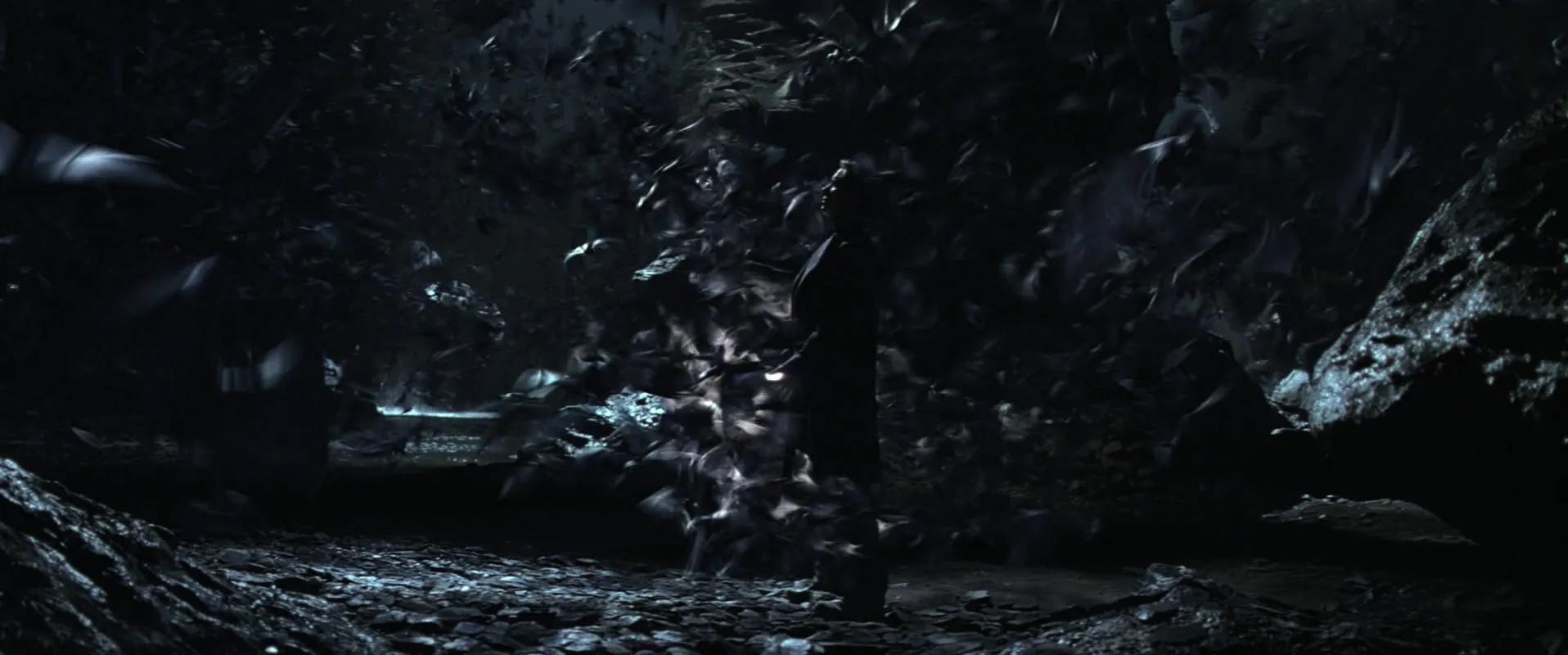
Batman: converting fear into a symbol you can carry
Batman is often described as “using fear as a weapon,” and that’s true—but it misses the interior mechanism.
Batman embodies fear as discipline because he reveals the true price of harnessing fear effectively.
Bruce Wayne doesn’t erase fear from himself. He builds a structure around it and lives inside that structure like a vow. The suit is not a mood. It’s a method. A way of taking a private terror and giving it a public shape.
And when the story is honest, it doesn't hide the cost. It demands sleep, softness, normal life, and intimacy. The price is what keeps discipline from becoming just another motivational cliché. Batman isn't a wellness icon; he's an emblem of controlled damage—turning trauma into routine and routine into symbol.
The symbol then does something profound: it redistributes fear in the city. Criminals feel watched. Citizens feel less alone. Gotham doesn’t become safe, but it becomes less owned by predators. Fear might still be there, but it’s been rearranged.
That’s discipline at the mythic level: fear redirected without being denied.
The aftertaste: restraint instead of relief
Most stories paint fear as something to escape. But discipline-fear sees it as something to endure. It doesn't feel heroic in the traditional sense. It looks quiet, like breath. Like someone choosing not to pass on their panic. Someone deciding not to turn fear into doom, not into cruelty, not into a show.
It's the hardest path because it offers no fantasy of an end. Fear will return. So the question becomes blunt and unyielding: When it does, who's in control?
This essay ends here without false comfort and with a clearer view of the inner workings: fear used to reveal, to foretell, to shape, to begin, to infect, and—if the story goes that far—to train.
Closing: The Exit Without Relief
By now, you’ve felt fear’s grip in the stories that hold us captive. It isn’t just a thrill or a scare; it’s a pressure system that pushes until something raw and real is revealed.
Fear strips away our pretenses, showing what we truly value, who we really are, and how we react when everything is on the line. It’s not about cheap scares; it’s about truth—the kind that cuts through us like a knife.
These six rooms aren’t just concepts to discuss; they’re experiences that change us. Together, they teach us this: fear is precise. It shows us what we love by revealing what we protect, what we worship by exposing what we serve, and who we are by forcing us to act when the walls close in.
This isn’t about making fear holy; it’s about understanding its power. Good stories chase precision—the kind that goes beyond entertainment and genre trappings. Fear collapses the gap between who we think we are and how we really behave. It turns thoughts into actions and beliefs into movements.
So, this ends without comfort. No promises that fear will leave you be or that you’ll come out feeling superior to your own fears. Just a clearer view of what fear does when fiction uses it—and what it can do to you if you let it write your story.
Fear doesn’t just scare us; it shapes us. It’s the force that pushes until something true is revealed.
And in the end, isn’t that what we all seek?
The truth—raw, honest, and unforgiving.
Thanks so much for putting this together. Really helpful for me as I continue to write.
Fantastic exploration!